Basement windows
Basement Window Replacement in Independence, MO
Older basements usually have single-pane glass in steel frames set directly into the concrete, rusted along the bottom and stuck shut. Our basement window replacement work in Independence, MO takes those out, frame and all, and puts in insulated vinyl windows that open, lock, and stop letting cold air and water into the basement.
When basement window replacement is worth doing
- Rust has eaten through the bottom of the frame, or a wood frame is soft enough to push a key into.
- The glass sweats or frosts in winter, and the floor above that wall is cold.
- The window won't open, so the basement can't be aired out.
- Water tracks down the wall below the window after a hard rain.
- Spiders, crickets and mice are getting in around a frame that no longer meets the concrete.
- The latch is broken or missing. A basement window is the easiest way into most houses.
Getting the old frame out of the concrete
A steel basement frame is buried in the foundation on all four sides. The glass and sash come out first. Then the frame is cut through at the middle of the sill and head with a reciprocating saw and each half is folded inward and worked loose. Done patiently, the concrete edge stays clean. Done with a sledgehammer, it doesn't.
Wood frames in block or stone foundations are simpler: the rotted wood is removed down to masonry and a new treated-wood buck is fastened in to give the window something solid to screw to. Either way, the new window is ordered to the size of the bare opening, shimmed, fastened, foamed around the edge and sealed to the concrete outside.
Hopper, slider or fixed
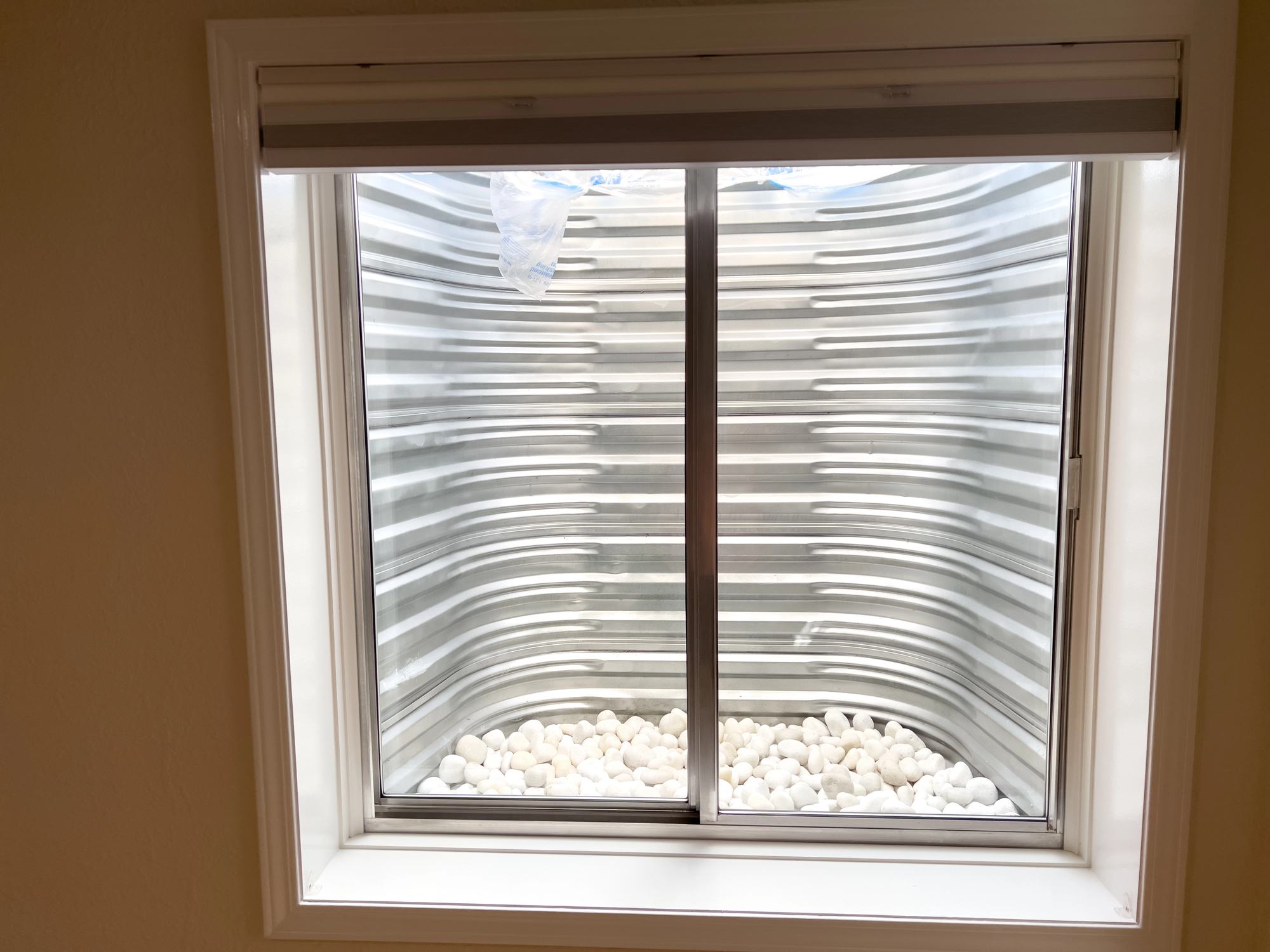
Hopper windows hinge at the bottom and tip in at the top. They seal tightly, fit short openings, and are what most basements get. Sliders suit wider openings and give a bigger clear space when open. Fixed units make sense where a window is behind a furnace or under a deck and will never be opened.
All three come with double-pane low-E glass. Obscure glass is worth asking for on windows that face a neighbor or sit beside a walkway.
Water comes first
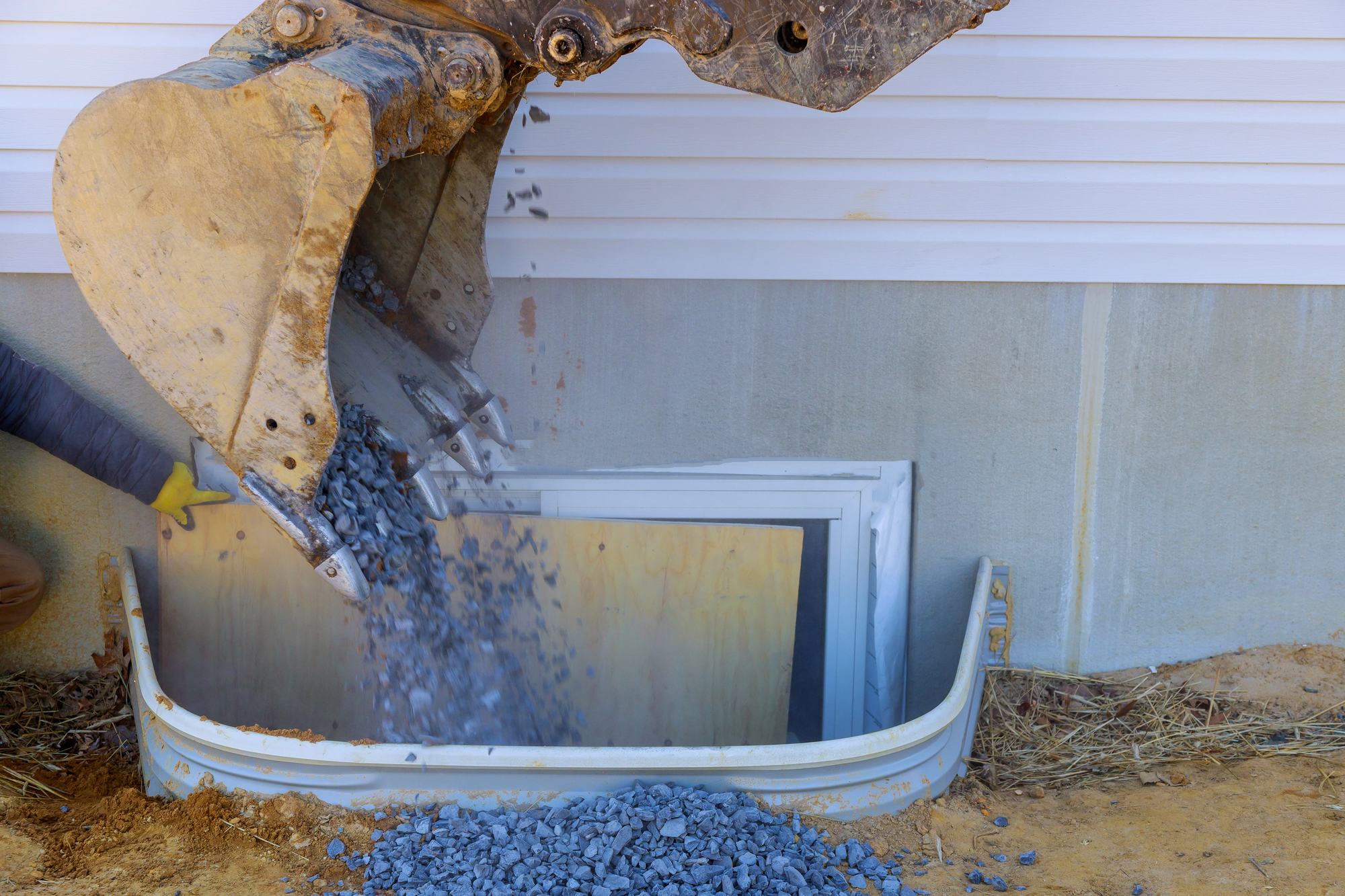
A new window won't fix water that pools against the foundation. Look at the outside while the estimate is being done. Soil should slope away from the wall. A window that sits at or below grade needs a well around it with gravel in the bottom that drains, and the well should be clear of leaves. Downspouts that empty beside a basement window need extending.
None of that is expensive, and all of it should be sorted out alongside the window work, or the new frame will be sitting in the same puddle the old one rusted in.
Basement window questions
Is it difficult to replace a basement window?
The window is small, but the frame is the hard part. Steel frames were cast into the foundation when it was poured, so they have to be cut and pried out without chipping the concrete. With the right saw it takes about an hour per window.
Should I use glass block instead?
Glass block is secure and private, and a mason is who installs it. It lets in little air, even with a vent, and nobody can climb out through it. For a basement you use, a vinyl window that opens is the more practical choice.
Is it illegal to have a bedroom in the basement without an egress window?
Building codes require every basement sleeping room to have an emergency escape opening, either a door to the outside or a window large and low enough to climb through. The residential code used across the country calls for at least 5.7 square feet of clear opening with the sill no more than 44 inches above the floor. A standard basement window is far smaller.
Do I need a permit to add an egress window?
In Independence, yes. A permit is required whenever a replacement window is larger than the one it replaces, and an egress window always is. It also means cutting the foundation wall and digging a window well, which is foundation work beyond a like-for-like swap. Call the city's Building Inspections office for the current size and well requirements.
Count them and send us the number
Basement windows are quick to measure and are often done the same day as the rest of the house.